Mold Base Machining Dallas
Lowrance Machine is a trusted provider of precision work and industrial mold solutions at
www.lowrancemachine.com. The company works across the full Dallas-Fort Worth Metroplex with focused, reliable production for a wide range of industries.
Our team applies advanced CNC machining techniques to provide consistent accuracy and fast turnarounds. We combine skilled staff, current equipment, and disciplined inspection routines to meet strict dimensional requirements.
Transfer Molds Dallas
Customers using our Dallas services gain from many years of practical shop experience in Dallas CNC operations. If you are a startup or a large manufacturer, our machine shop is prepared to manage specialized parts and complicated machining jobs.
Get a production-ready estimate today to review your project needs. Lowrance Machine can improve production flow and support you with the service level your business needs.
Professional CNC Lathe Machining Services In Dallas
Lowrance Machine combines decades of hands-on machining experience with disciplined engineering reviews to manufacture dependable, precision parts. Our focus is clear: provide repeatable accuracy and dependable output for regional industrial customers.
Precision Engineering And Quality Standards
With 40 years of expertise, our manufacturing facility uses strict inspection procedures. Our team applies controlled machining steps to hold close tolerances and confirm accuracy on every run.
Supporting The Dallas Metroplex
Lowrance Machine works throughout the full Dallas Metroplex with adaptable production schedules and fast delivery. Our capabilities cover CNC milling, CNC turning, and related machining support to meet demanding specs.
- Full precision machining services for prototypes and repeat production components.
- Dedication to close tolerances and consistent quality.
- Regional production help and responsive project service for area manufacturers.
Why Lowrance Machine Is A Strong Choice For Your Projects
Lowrance Machine helps convert design ideas into reliable production with a realistic, hands-on manufacturing method. Our machine shop blends years of production experience with technical manufacturing insight to support demanding project needs.
Clients value our focused team for straightforward communication and disciplined project control. We work closely with customers to lock down requirements and limit production mistakes, so components leave on schedule and to specification.
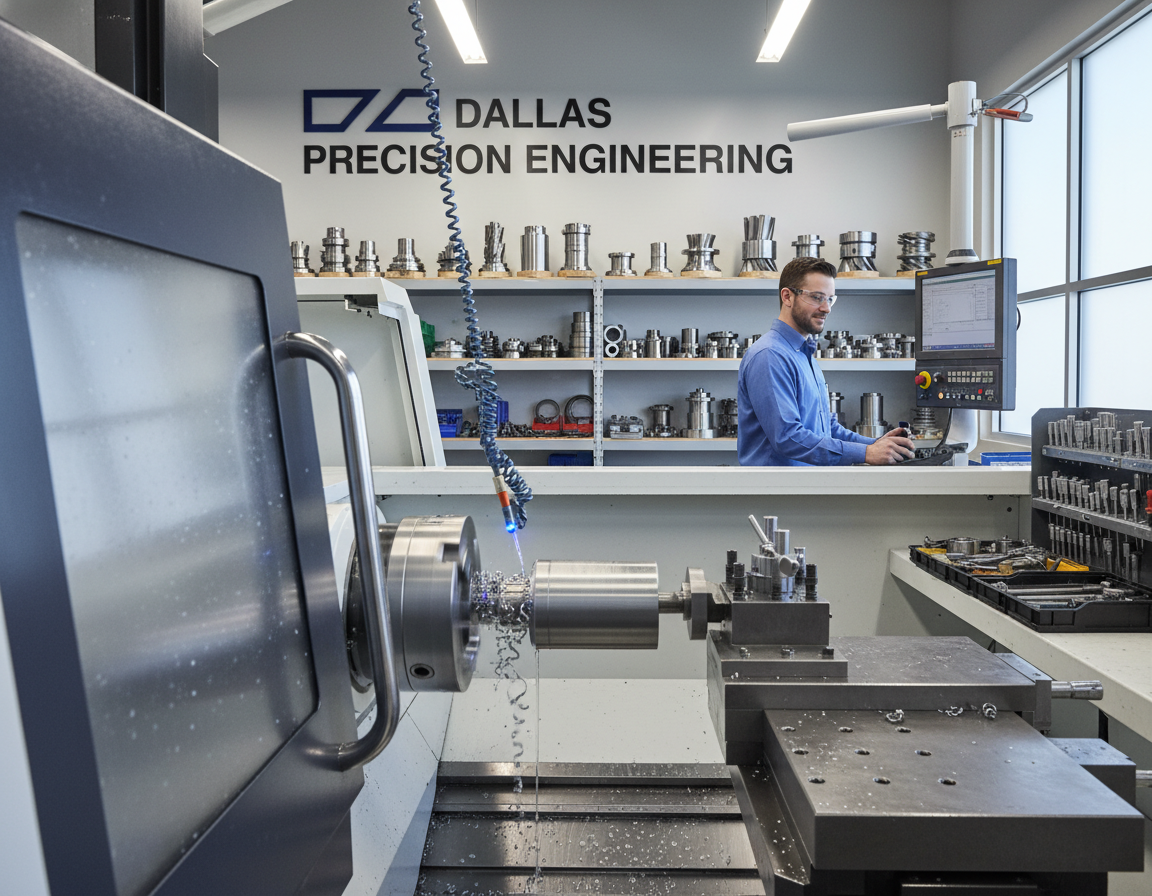
Quality sits at the center of every process. We use controlled quality procedures to maintain repeatable accuracy from run to run and to help finished parts match the intended design.
- Experienced machinists who convert design intent into production-ready parts.
- Open timelines with responsive communication throughout your production run.
- Dependable results that support lower costs and faster production for industrial customers.
Advanced CNC Turning And Milling Capabilities
Our facility relies on advanced 11-axis equipment to handle complex geometries and tight tolerances. This level of axis control increases the range of parts a modern machine can make and speeds up setups for repeatable runs.
Advanced Multi-Axis Machining
Coordinated multi-axis machining allows our team to reach challenging areas of a part in one setup. Fewer setups lower the chance of error and strengthen repeatability.
That capability makes difficult designs more practical and a broad mix of metals and engineered materials.
High-Speed Milling
High-speed machining produces clean finishes with shorter cycle times. Our team combines fast spindle performance with refined toolpaths to preserve material quality and satisfy specifications.
Precision Turning Operations
Our precision turning process focus on accuracy and surface quality. Each finished part is reviewed to make sure measurements and finish meet requirements.
- 11-axis equipment for complex and repeatable components.
- High-speed milling and CNC milling for demanding dimensional specifications.
- Built-in inspection support to verify production quality.
Precision Machining For Many Industrial Sectors
Our facility supports industries from aerospace to energy with consistent high-quality manufacturing.
Our team offers high-accuracy manufacturing support for diverse manufacturing markets, including large regional companies and Fortune 500 businesses based in the area.
Our production strengths serve high-demand markets such as energy, aerospace, and other critical industries where accurate parts help protect safety, reliability, and operating time.
By using advanced CNC milling and turning equipment, we provide dependable production outcomes that meet strict specifications.
- Accurate production for prototypes and extended runs to help production timelines stay on track.
- Quality checks that ensure each part conforms to customer requirements.
- Flexible services to handle unique part geometry and material needs.
We serve many different markets with the manufacturing knowledge needed to remain competitive. Every part is made to align with required performance and quality standards.
Commitment To Tight Tolerances And Quality Control
Our shop backs precision with certified systems and continuous monitoring. Our processes follow ISO 9000 compliance expectations and apply Statistical Process Control to control process variation and protect precision.
Statistical Process Control Methods
SPC monitoring maintains process stability and supports reliable part accuracy. Live process charts and control plans warn operators about process drift so teams can act before defects develop.
Our team emphasizes precision machining standards so every part satisfies required tolerances. Advanced measuring equipment verify dimensions and surface finish at critical points in the manufacturing process.
- Documented ISO 9000 quality practices that support documented procedures and audits.
- Statistical Process Control methods that lower variation and support efficiency.
- Quality inspection steps that validate accuracy across runs.
By combining data-driven process control with skilled staff and calibrated measuring tools, we minimize scrap while delivering consistent quality parts for your industrial projects.
Modern Equipment And Technology Advancements
Our climate-controlled 43,000 sq. ft. facility in Fort Worth gives us the capacity to manage demanding projects under stable conditions.
Our machine shop houses the latest equipment to produce complex parts with precise requirements. Regular upgrades keep our production lines current and efficient.
We operate as a leading CNC machine shop by selecting technology that improves output and consistency. Those equipment choices create stronger quality and repeatable precision on every job.
Advanced equipment also improves production flow. Real-time monitoring, advanced controls, and automated toolpath strategies allow the team to hold accuracy and protect project schedules.
| Machine Category | Key Capability | Production Use | Main Benefit |
|---|---|---|---|
| Multi-axis machining centers | Difficult geometry | Complex production components | Fewer setups, higher consistency |
| High-speed milling centers | High-quality machined finish | Prototype and production runs | Shorter machining cycles |
| Automated inspection | Real-time verification | Production-stage inspection | Less waste with stronger quality control |
| Tooling management systems | Efficient tool planning | Ongoing production programs | Reduced downtime |
Efficient Lead Times And Streamlined Production
We compress schedules without cutting corners so parts move from design to delivery faster.
Our production schedule runs twenty hours daily during the workweek. The expanded production day shortens lead times while keeping close control on quality.
Rapid Prototyping Support
Rapid prototyping helps convert ideas into real components quickly. Technical staff and machinists coordinate to refine a design and validate function in the first stages of production.
Rapid prototype models allow customers to review designs sooner and make informed choices quickly.
Production Runs That Scale
We scale from single prototypes to full production runs without abandoning the production method. This repeatable approach maintains precision while supporting more predictable pricing.
- Extended 20-hour operating schedules enable faster ramp-up and shorter delivery time.
- Process controls maintain consistent quality for both short and long runs.
- Streamlined workflow helps support reliable CNC machining and on-time output for manufacturing partners.
Custom Finishing And Secondary Machining Services
We provide tailored secondary machining and finishing processes to ensure every part meets both visual and performance requirements. Lowrance Machine supports thermal processing, plating, and coating services matched to your material requirements and final application.
The shop folds these finishing steps into manufacturing so finished machined parts are ready for the next stage. This reduces handling and speeds time to market.
Common finishing services include hardening, anodizing, passivation, and protective coatings. We also provide precise surface finishing for better appearance and longer wear life.
- Heat treat and hardness control for long-term durability.
- Protective plating and coatings customized for material requirements.
- Finish milling, deburring, and quality inspection included in the workflow.
| Secondary Service | Main Purpose | Customer Benefit | Often Used Materials |
|---|---|---|---|
| Heat treat processing | Improve strength | Longer wear performance | Steel and alloy materials |
| Plating | Corrosion protection | Extended service life | Steel, brass |
| Surface coatings and finishing | Surface appearance & function | Improved consistency and finished fit | Composites and aluminum |
Through full-chain management from machining to finishing, we satisfy detailed requirements and provide dependable high-quality parts, whether the need is visual, functional, or both.
Logistics And Inventory Management Solutions
We coordinate delivery timing with your manufacturing rhythm so parts arrive exactly when needed. That planning process lowers on-site inventory while helping assembly lines keep moving.
The Lowrance Machine team provides complete logistics support, including JIT delivery and adaptable storage options. Our production team coordinates steady schedules with clients to cut lead times and smooth the supply flow.
JIT Delivery And Production Support
We coordinate shipments, track orders, and adjust runs to match changing customer demand. The result is lower stock volume and reduced inventory expense.
Our planning approach connects cleanly with your manufacturing process. That ensures timely arrival of high-quality components according to the planned timeline.
| Service | Benefit | Typical Use |
|---|---|---|
| Just-in-time part delivery | Reduced inventory and less waste | Regular part restocking on daily or weekly schedules |
| Adaptable warehousing | Available stock with quick release | Temporary or longer-term storage |
| Schedule coordination | Clearer delivery timing | Integrated production planning |
Experienced Manufacturing Team And Expertise
Skilled machinists, technicians, and process engineers coordinate to transform designs into repeatable precision parts. Our staff provides decades of manufacturing experience to each project and keeps quality consistent across many industries.
Our team pairs skilled talent with current machinery to manage complicated manufacturing programs. That blend of people and tools supports tight tolerances and stable production for ongoing customers.
Our capabilities span early design review, fixture development, machine setup, and final inspection. That complete-service method streamlines project transfer points and limits avoidable rework for manufacturing partners.
- Experienced staff who solve technical challenges and optimize process flow.
- High-capability machinery for many materials and strict tolerances.
- Complete services that help keep production timely and within tolerance.
As an experienced Dallas CNC provider, we focus on strong service, accuracy, and quality. The facility remains prepared to produce many types of parts and provide the precision your job demands.
Requesting A Quote For Your Custom Parts
Receive fast pricing for parts and production work — our team provides same-day quotes for many requests. Share details about your design, materials, and volume so we can return an accurate quote today.
Our team quotes CNC turning, CNC milling, and related machining services. Sharing accurate project details allows us to match the right capabilities and return competitive pricing quickly.
- Fast quote turnaround for prototypes and production quantities.
- Discuss design specs, tolerances, and materials with an experienced team.
- Quick responses when drawings, quantities, and timelines are provided.
Whether your project requires one prototype or a larger production batch, reach out to start the conversation. The goal is simple quoting that helps your project stay on track.
Final Thoughts
When accuracy matters, our team works to deliver consistent results that keeps difficult manufacturing timelines moving.
Lowrance Machine remains committed to high quality and precision across every service. We deliver precision machining and CNC machining solutions that satisfy demanding tolerances while maintaining precision from prototype to full production.
Our dependable lead times and controlled processes support many industries in reducing downtime and remaining competitive. Selecting our machining services means a partner who values efficiency, clear communication, and on-time delivery.
Reach out today to talk through how our team can support your upcoming job and help keep your components in specification and on schedule.
Related: Lowrance Machine Custom Machining Solutions in Dallas