
The Dangers of Ignoring Grease Cleaning in Pomona
Operating a restaurant in Pomona involves a long list of everyday responsibilities. One of the most critical, yet often overlooked, is managing the fats, oils, and grease (FOG) that flow from your kitchen. Neglecting this duty can lead to serious problems. That’s where a trusted local partner makes all the difference.
This site is about Grease Cleaning Pros in Pomona

Click here for Grease Cleaning Pros in Santa Barbara

Check out Grease Cleaning Pros in Torrance
Grease Cleaning Pros is your leading expert for this essential service. We know that regular grease interceptor maintenance is more than just another task on your list. It is a vital investment in the health of your business and our community.
Without proper maintenance, a clogged system can trigger major issues. Problems like unpleasant backups, costly code violations, and heavy fines can follow. In severe cases, it may even shut your operation down temporarily. No food service owner can afford to ignore risks like these.
Our team is the dependable, friendly solution trusted by kitchens across Pomona. We focus on full compliance and your peace of mind. With strong local knowledge, we help ensure your operations run smoothly and safely.
We design our service to be completely hassle-free. We schedule service around your busy hours so disruption stays minimal. Ready to learn how proper FOG management protects your business? Review our complete service offerings below.
Main Takeaways
- Regular grease interceptor maintenance is a crucial investment for any food service business.
- Neglect can lead to health code violations, expensive fines, and potential operational shutdowns.
- A trusted local service provider ensures compliance and reduces risk.
- Professional service should be convenient and designed around a busy kitchen’s hours.
- Effective FOG management is necessary for your restaurant to operate safely and smoothly.
- Working with experts helps protect your business’s reputation while giving you confidence.
- Routine preventive care costs far less than emergency repair work or regulatory fines.
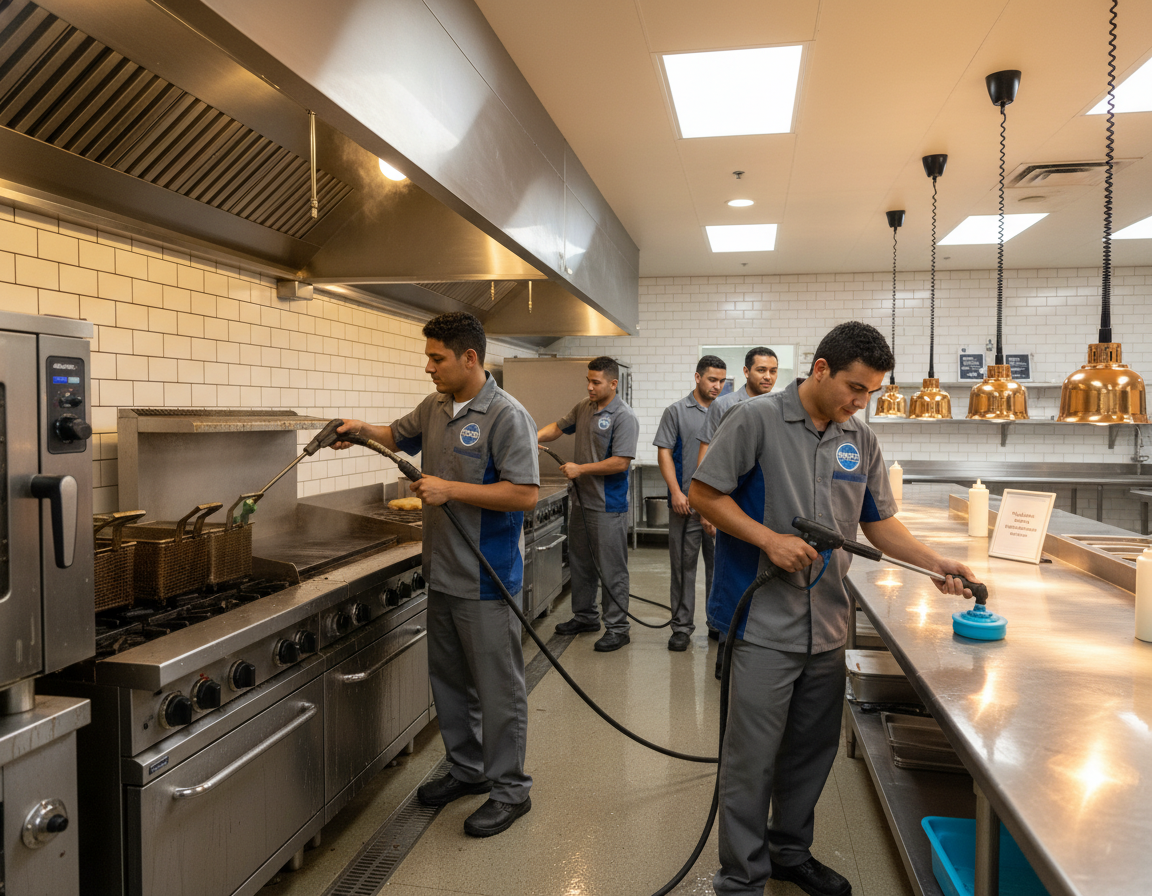
Welcome To Grease Cleaning Pros, Pomona’s Trusted Choice
Every successful food service operation in our city relies on a hidden hero: a well-maintained FOG management system. As your local partner, we are dedicated to keeping that system operating at its best.
Our mission is simple and clear. Our team delivers reliable, high-level service that helps protect both your business and our community sewer system. Consider us your first line of defense against costly backups and code violations.
Our team is made up of certified professionals with deep experience. They know local health code requirements inside and out. Even more importantly, they understand the fast pace of a commercial kitchen.
Our company was built on a customer-first approach. You will always receive flexible scheduling, transparent pricing, and clear communication. Our goal is to make this essential maintenance *truly* hassle-free.
Our team invests in professional equipment for every service. All waste is handled with environmentally responsible disposal methods. You can count on us to care about our community just as much as your kitchen.
We understand that downtime means lost revenue. Our team prioritizes minimal disruption. Our team often works around your schedule by handling interceptor service before prep hours or after closing time.
It is a point of pride for us to serve as the trusted partner for many local eateries. We serve everyone from national chains to beloved family-owned cafes. When you choose our team, you’re choosing a cleaning pros partner invested in your long-term success.
The True Cost Of Ignoring Your Grease Trap
Ignoring your kitchen’s grease interceptor may appear to save money at first. It’s a gamble with extreme stakes. The real cost of neglect goes far beyond the price of routine service.
When this critical component fails, the consequences are serious and wide-ranging. It becomes an issue that can hurt your budget, your daily operations, and your reputation all at once.
Fines And Financial Penalties
Municipalities impose strict rules on FOG management. Non-compliance fines are not small. These fines commonly start in the thousands of dollars and may climb much higher.
Data shows penalties ranging from $1,000 to a staggering $50,000 for severe neglect. This is money lost with absolutely no benefit in return. It’s pure loss.
By comparison, routine service comes with a manageable and predictable cost. A scheduled visit may cost only a few hundred dollars. Serious repairs and large fines can quickly run into the thousands.
The numbers are easy to understand. Investing small amounts on a regular basis helps prevent catastrophic losses later.
Health Department Issues And Forced Shutdowns
A health inspector visiting a malfunctioning interceptor is a nightmare scenario. They may issue a “Cease and Desist” order immediately. Your kitchen can be shut down immediately.
The chain reaction is severe. You lose revenue from every meal not served. Perishable inventory may spoil. Your staff is idle while you scramble for a fix.
This shutdown is not just a quick delay. It can continue for days before the system is cleaned, inspected, and cleared. The overall financial damage from a shutdown often far exceeds the fine itself.
Consistent professional maintenance is your best defense against this scenario. It demonstrates due diligence and helps keep your business open.
Damage To Reputation And Customer Trust
Fines and shutdowns have a paper trail. The less visible damage to your reputation can be even more devastating. News about a health violation spreads quickly in a connected community like ours.
Trust built over years can evaporate overnight. Safety and cleanliness strongly influence where customers choose to eat. One incident can permanently change how they see your business.
Direct liability risks also come into play. An overflow creates slippery floors. These conditions can result in employee or customer slip-and-fall injuries.
Events like these may trigger costly legal claims. They may also harm expensive kitchen equipment when waste backs up into work areas.
Protecting your reputation is invaluable. Consistent, documented care of your grease trap shows you prioritize safety. It quietly but powerfully communicates that you take standards seriously.
If you suspect service is needed, don’t wait until the situation becomes a crisis. Taking action today is the practical and affordable decision.
Get in touch to get quote and help secure the future of your business. Prevention is always the most cost-effective path.
When Should Your Pomona Kitchen Clean Its Grease Trap?
The frequency of interceptor maintenance varies widely based on your specific kitchen’s output. There is no one-size-fits-all answer. The right schedule helps protect your plumbing, budget, and business license.
Most local regulations establish a clear standard. They call for service when fats and solids reach 25% of the unit’s capacity. Once that threshold is reached, efficiency drops sharply. At that stage, both legal and functional problems are much more likely.
This rule must be followed without exception. It helps keep everything flowing properly.
Why Most Restaurants Need Service Every Month To Every Quarter
For a busy eatery, grease traps need attention often. A high-volume spot serving fried foods might need monthly service. This schedule matches the demands of high-volume operation.
Smaller cafes might handle a lighter load. Because of lighter output, cafes might stretch service to a quarterly schedule. Every kitchen is different.
Certain operations produce even more demanding service needs. A packed sports bar or large hotel kitchen could fill its interceptor in just two weeks. Those grease traps need very frequent service.
Don’t guess about your timeline. Regular checks show how fast your unit fills. This kind of data allows us to create the ideal maintenance plan for you.
What Determines Your Cleaning Schedule
Several important factors determine how often you should schedule service. Your menu is one of the biggest factors. A kitchen serving lots of burgers and fries produces more grease than a salad-based restaurant.
Your daily customer volume changes the equation. When business increases suddenly, buildup happens faster. A busy season may push you onto a monthly service schedule.
Interceptor size makes a big difference. A small under-sink unit fills much faster than a large outdoor tank. Smaller cafés may need less frequent service when their equipment is properly sized.
Local health codes are the final word. Pomona has its own rules. Knowing them avoids trouble and fines.
Good kitchen habits help, too. Using sink screens and scraping plates helps reduce how quickly the system fills. However, even excellent practices cannot replace the need for professional cleaning.
The smartest approach is to keep detailed records. Keep detailed records of each pump-out. Note the date and how full the trap was.
These records show the specific pattern of your operation. It lets you predict the next service date accurately. You will not be caught by surprise.
Working with a trusted local team makes this easy. They help you create a data-driven schedule that fits your operation precisely. That proactive approach helps save money and reduce stress over time.
Warning Signs Your Grease Trap Needs Immediate Attention
Your kitchen’s plumbing system sends clear distress signals when it’s overwhelmed by fats, oils, and grease. Learning to recognize these alerts is crucial. Catching them early prevents a small issue from becoming a full-blown crisis.
Do not treat these symptoms as normal. These are clear signals that your interceptor system needs attention. Acting fast helps safeguard your business operations and finances.
Slow Drains And Warning Gurgling Sounds
One of the earliest and most common warning signs is slow drainage. If water lingers in your three-compartment sink, it’s a sign. Grease buildup is restricting normal flow.
Pay close attention to your floor drains. Gurgling or bubbling noises are not harmless warning signs. They usually indicate trapped air caused by a serious blockage in the lines.
This kind of buildup shows that your interceptor is nearing capacity. Your drains need professional service before they stop working completely.
Bad Odors And Visible Grease Overflow
A sudden rotten egg odor is a serious warning sign. That odor is caused by hydrogen sulfide gas. The gas is created by decomposing grease and can be hazardous.
This kind of smell creates an unhealthy and unpleasant environment. They can be hazardous to both staff and customers.
If you can see backup in the system, the warning is even clearer. If you notice grease or food solids in sink basins after draining, act fast. That kind of residue is a sign the unit is overflowing and failing.
This visible failure requires immediate service to avoid a health violation.
Multiple Drains Backing Up At Once
Is your kitchen sink, mop sink, and floor drain all backing up simultaneously. That is a critical sign. The issue is probably in the main line or in a completely full interceptor.
When multiple drains go down at once, your whole system is compromised. Do not try a do-it-yourself fix such as pouring hot water down the drain line.
Using hot water only melts grease for a short time. It lets the fat move farther down the pipe and harden into a more compact clog.
In cases like this, your traps need more than basic pumping service. You may need hydro jetting service to clear the hardened blockage from the pipes.
All of these symptoms together are a strong signal that expert help is needed. At the first sign, contact a trusted local service team. Professional assessment and cleaning can restore flow and prevent costly damage.
Our Thorough Grease Trap Cleaning Process
Our detailed service protocol ensures every component of your interceptor is restored to peak performance. We use a strict, multi-step sequence built for complete effectiveness.
Our step-by-step approach ensures no detail is missed. Your system will continue to function reliably until the next scheduled maintenance visit.
Initial Inspection And Documentation
Every job begins with a comprehensive evaluation. Our technician first locates and safely accesses your unit.
We measure the thickness of the accumulated FOG layer. This initial assessment is carefully documented. These records are important for your health code compliance documentation. They serve as proof of diligent, regular cleaning.
Complete Pump-Out And Scraping
The next step is to deploy our professional vacuum truck. Its high-powered equipment removes all contents from the chamber. This process removes floating fats, wastewater, and settled solids. The result is an completely empty interceptor.
A simple pump-out alone is not sufficient. After pumping, the team hand-scrapes the interior baffles. That critical trap cleaning step clears away hardened buildup the vacuum cannot reach. That step gets the unit ready for thorough washing.
Pressure Washing And Final Check
High-pressure washing is the cornerstone of a true professional cleaning. We thoroughly scour every interior wall and the bottom of the unit. That eliminates grease residue and harmful biofilm throughout the unit. The chamber is left sanitized and free of odors.
We then carry out an important final inspection. We check all inlet and outlet pipes for hidden clogs. The structure is also checked for cracks, wear, or other damage. This is important for long-term reliable operation.
We finish by refilling the unit with clean water at the proper level. That allows it to works perfectly as soon as we leave.
From beginning to end, a standard grease trap cleaning usually takes between 30 and 90 minutes. Our team is trained to work around your schedule seamlessly.
We cause minimal disruption to your kitchen’s flow. Once the job is complete, you receive full documentation showing your system is compliant and ready.
Choosing expert trap cleaning means your equipment will works perfectly. That is the reliable outcome you should expect from a dedicated local service team.
Rely on Grease Cleaning Pros to complete this thorough process. We design every visit to work around your schedule and protect your business.
How To Understand And Maintain Grease Interceptors
When a kitchen produces enough waste to require a larger containment system, a grease interceptor becomes essential. These large-scale units are crucial for operations that produce a high daily volume of cooking byproducts.
Proper interceptor care is a specialized service area. It requires specific knowledge and heavy-duty equipment to perform correctly.
Understanding What A Grease Interceptor Is
A grease interceptor is essentially the larger, often underground counterpart to the under-sink grease trap. While a typical trap might hold 50 gallons, an interceptor can contain 500 to 5,000 gallons.
It is built to serve full buildings or high-volume operations. High-volume operations like steakhouses, hotels, and food courts frequently depend on this technology.
Systems like these grease interceptors are essential when dealing with significant pomona grease production. They prevent fats and oils from entering the municipal sewer lines.
A trap interceptor works by slowing wastewater flow. This gives fats time to cool and rise to the surface so they can separate from the water.
That process protects shared plumbing infrastructure throughout the community. This is one of the first protections in place for the environment we all share.
The Specialized Cleaning Large Interceptors Require
Maintaining these large units is not a DIY project. This type of work requires heavy equipment and certified expertise.
The service process begins by accessing large concrete vaults or metal tanks. Our team must carefully remove heavy covers before work can begin.
After access is gained, we deploy an industrial-grade pump truck. This equipment removes thousands of gallons of waste, water, and settled solids.
These units often contain multiple chambers and baffles inside. Every chamber must be thoroughly scraped and pressure washed.
Comprehensive inspection is one of the most important steps. Our experts inspect inlet and outlet tees, flow control devices, and the structure for cracks.
The inspection also includes checking for groundwater infiltration. That helps ensure structural integrity and reduces environmental risk.
That level of professional maintenance is exactly why these systems need professional care. This work is much more involved than a simple pump-out.
Even despite regular cleaning in the kitchen, interceptors continue filling at a steady rate. Most require service every three months.
The busiest kitchens, however, might need monthly attention. Their grease output can exceed what a standard schedule can handle.
Adhering to a strict regular cleaning plan is non-negotiable. This is what helps stop major system failures that could force a shutdown.
Even more importantly, it helps stop major environmental contamination. The remediation costs for such an event are extraordinarily high.
A local expert helps make sure this professional maintenance is completed safely and correctly. They have the right tools and know-how for your large grease trap interceptor.
Taking proper care of your grease interceptors is an investment in your business’s continuity and the health of the community. This is a responsibility that should be managed by experienced specialists.
Responsible Used Cooking Oil Pickup & Recycling
Once cooking is done, the used oil in your fryer presents an important decision. Responsible recycling turns a messy liability into a valuable asset. Unsafe disposal, however, can lead to costly plumbing disasters.
That used fryer oil is far more than just waste material. Handled correctly, it supports a positive cycle for your business and the environment.
Working with a dedicated service provider transforms the entire process. You gain a reliable partner for pickup and gain potential financial returns.
Stop Plumbing Problems While Earning Rebates
Pouring used cooking oil down a drain is a leading cause of blockages. Once it cools, it solidifies within your plumbing. The result is a dense clog that can affect your entire kitchen system.
Those backups can result in emergency service calls, lost revenue, and serious fines. Repairing a major sewer line break can be extremely expensive.
Routine oil pickup removes this risk entirely. Our team provides sealed containers for your cooking oil waste.
Our team collects it on a schedule that matches your output. That helps keep your drains clear and your kitchen operating smoothly.
This service also unlocks an added benefit: rebates. Your collected used cooking material can carry market value.
Many restaurants receive credits or payments based on how much they recycle. It turns a potential problem into a modest revenue stream.
This proactive strategy benefits everyone. You protect your plumbing while putting money back into your business.
From Your Fryer To Renewable Fuel: The Recycling Journey
The recycling journey of your cooking oil is impressive. Once our team collects it, the oil is transported to a processing center.
There, the oil is carefully filtered to remove food particles and water. That purification step is critical for producing a clean starting material.
After cleaning, the oil enters a chemical conversion process called transesterification. This transforms it into biodiesel, a clean-burning renewable fuel.
This biodiesel can be used in trucks, heavy machinery, and heating systems. Your kitchen’s waste then directly helps reduce dependence on fossil fuels.
The environmental impact of this process is substantial. Biodiesel can reduce greenhouse gas emissions by up to 85% compared to traditional diesel.
In addition, every gallon of used cooking oil recycled helps prevent contamination of about one million gallons of water. This protects our local rivers and watersheds.
Choosing recycling means your kitchen actively contributes to a cleaner local environment. It is a strong example of a circular economy at work.
A common quick fix for slow drains is pouring hot water into the line. This only melts grease temporarily.
The liquefied fat simply travels further down your pipes. It then cools and hardens into an even more solid, extensive clog.
When pipes are already burdened by years of buildup, a stronger solution is needed. This is exactly when hydro jetting is needed.
Hydro jetting powerfully removes years of built-up grease, sludge, and debris. This process uses a focused stream of water at pressures reaching 4000 PSI.
This powerful force scours the interior walls of pipes completely clean. This method is highly effective and works without harsh chemicals.
If your drains stay slow on a regular basis, you may need hydro jetting service. That is the definitive way to restore proper pipe flow.
Using a few best practices helps maximize your results:
- Always use designated, leak-proof containers for used cooking oil storage.
- Use strainer baskets in sinks so food solids are caught before entering drains.
- Do not pour fats or cooking oil down any drain, even floor drains.
- Work with a certified recycler to ensure correct handling and documentation.
Ready to secure your plumbing and explore rebate opportunities? Get quote with our local team today. We’ll design a pickup schedule that turns your pomona grease output into a community resource.
Set Up Your Pomona Grease Trap Service Today
The date of your last service is more important than it may seem. That date directly reflects the health and safety of your operation.
Take a look at your records now. When the last entry is missing or older than 90 days, your grease trap should be considered overdue. Don’t wait for a foul odor or a backed-up sink.
Proactive, professional cleaning is your most cost-effective strategy. This protects your Pomona restaurant against violations, fines, and closures.
Scheduling with Grease Cleaning Pros is simple. Our team works around your operating hours and handles each trap cleaning quickly. Your system works perfectly the moment we leave.
Our service also includes essential documentation. This makes it easy to meet health inspector documentation requirements.
Ready to enjoy peace of mind? Get quote today by contacting our friendly team today. Our team will create a maintenance plan tailored specifically to your kitchen.
Your pomona grease trap need professional care to perform properly. Let us be your reliable local partner for all grease trap cleaning needs. Get quote now and protect your operation today.
Related: Additional Details About Grease Cleaning And Pumping Certifications