
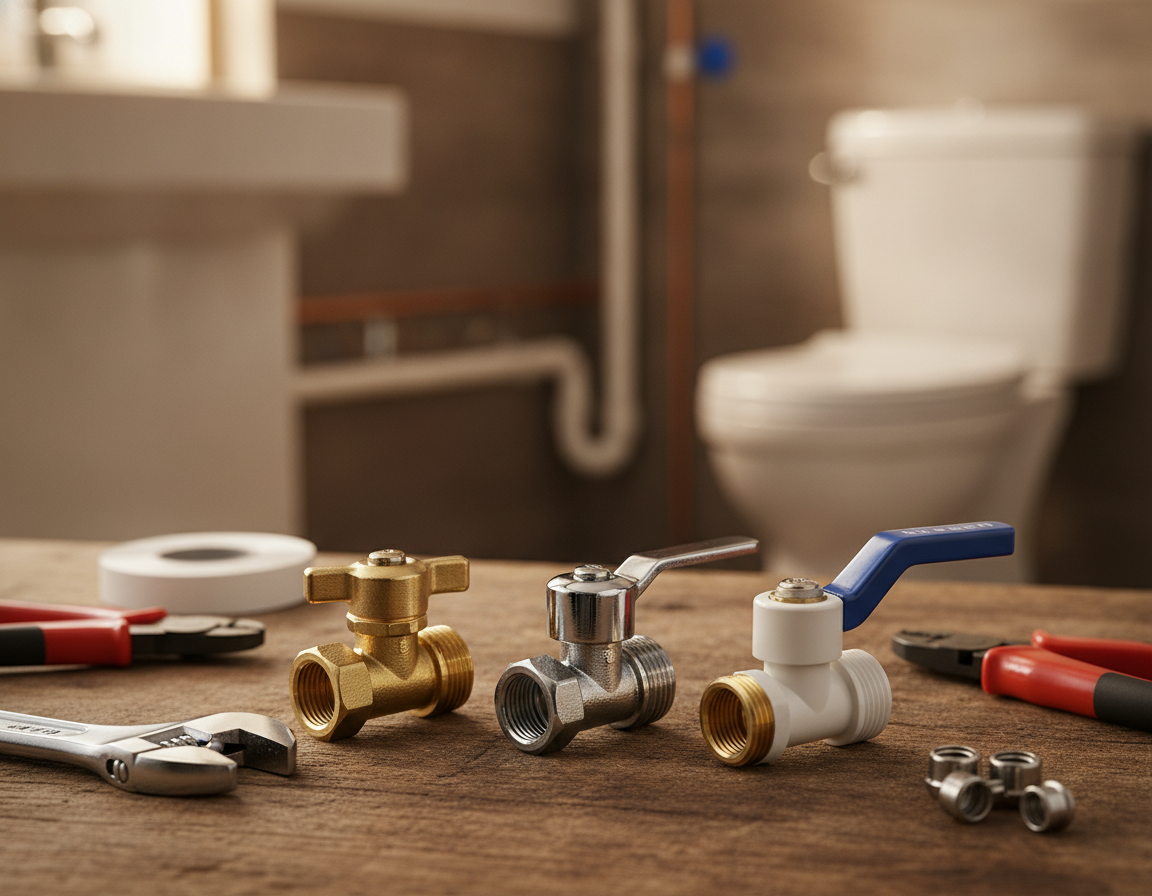
A low-profile angle stop is an L-shaped valve installed where the supply line connects with a fixture. You will find these valves under sinks, behind toilets, and at many appliance connections. A functioning Plumbing Angle Stop lets you isolate one fixture without shutting off the main supply. That means fixture swaps can be completed more easily.
Angle Stops
In many homes, angle stops measure about 3–6 inches and redirect water at a 90-degree angle toward the fixture. Modern installations favor quarter-turn ball-style Angle Stop Valve designs. They are faster to operate and commonly provide longer service life. If an angle stop corrodes, leaks, or becomes stiff, replacing it helps prevent water damage and simplifies future maintenance.
Main Takeaways
- Plumbing Angle Stops let you shut off water to one fixture without touching the house main.
- Angle Stops Plumbing are commonly installed under sinks and behind toilets for easy access.
- An Angle Stop Valve typically measures 3–6 inches and turns water 90 degrees toward the fixture.
- Quarter-turn models are commonly preferred because they shut off faster.
- Any valve that corrodes should be replaced before it causes larger water problems.
Understanding An Angle Stop And Why It Matters
The angle stop is a compact shutoff valve installed where a water line meets a fixture. It controls water to a single fixture so repairs, upgrades, or replacements can happen without closing the whole-house main. Homeowners, plumbers, and inspectors depend on these valves to keep maintenance contained.
Angle Stop Definition Explained
An angle stop is a right-angle valve installed on the supply line feeding a fixture. It comes in different designs, including Angle Stop Valves with multi-turn stems or quarter-turn ball internals. The Plumbing Angle Stop fits neatly under sinks and behind toilets while saving space.
Where Angle Stops Are Installed In A Typical Home
Plumbing Angle Stops are commonly found under kitchen and bathroom sinks. They sit at the back of cabinets where the supply line enters. Toilet angle stops are normally mounted on the wall behind or beside the toilet tank. Angle stops may also appear at appliance connections, including dishwashers, ice makers, washing machines, and some water-heater cold-supply lines.
Practical Benefits For Homeowners
A major advantage of an Angle Valve For Sink is fixture isolation. With a working Plumbing Angle Stop, you can shut off a single sink, toilet, or appliance line while fixing a leak or replacing a fixture. This helps prevent minor leaks from becoming major water-damage events and keeps household disruption lower.
Another advantage is convenience. Angle Stops Plumbing are compact, helping reduce repair time and inconvenience. Periodic exercising of the valve keeps it operable. Replacing old multi-turn stops with quarter-turn Angle Stop Valve models can make emergency shutoff less stressful.
Angle Stop Versus Angle Seat Valve
Household angle stops serve low-pressure potable water lines. They are suited to sinks, toilets, and everyday household appliances. An industrial Angle Seat Valve is a different type of valve. It is built for higher-pressure, higher-temperature, or corrosive applications in steam, chemical, and HVAC systems. Angle seat valves use pistons and durable metal seats for tough service, while an Angle Stop is a simpler fixture-level shutoff for residential plumbing.
Angle Stop Types And How To Choose One
Choosing the right angle stop for a home project means considering material, operation, connection type, and special features. The following overview helps homeowners and plumbers choose Plumbing Angle Stops that are code-conscious.
Angle Stop Materials
Brass is widely used as the standard material for Angle Stops. Because it resists corrosion and may last 10–20 years, brass is a strong choice for Quarter-Turn Angle Stops. Stainless steel bodies are useful in humid basements, coastal locations, and exposed areas where rust resistance matters. Plastic-bodied stops are cheaper, but they are typically less durable and can degrade in hot-water service. Always choose a Lead-Free Angle Stop for potable water in the United States to meet federal and state standards.
How Angle Stops Operate
Quarter-turn valves use a ball or disc and open with a 90-degree turn. They offer low turning force and better resistance to mineral buildup, which makes them useful for frequent operation and emergencies. Multi-turn valves rely on a rising stem and need several turns to open or close fully. They provide finer flow control but are more likely to leak or stick in older homes.
Connection Types
Compression Angle Stop fittings join with a nut and ferrule and suit copper or CPVC stub-outs. They install without heat and are popular in remodels. Sweat Angle Stop connections are soldered to create a slim, permanent joint where torch work is safe and allowed. FIP-threaded valves attach to male adapters and usually require PTFE tape or pipe-thread sealant. Push-Fit Angle Stop models, including SharkBite-style options, can slide onto copper, CPVC, or PEX without special tools. They are useful for DIY work or cramped areas, while Compression Angle Stop options remain common where future rework is expected.
Special Features
Some Angle Stop Valve designs include a built-in Water Hammer Arrestor Angle Stop. These use a piston or air chamber to absorb shock from quick-closing fixtures and reduce noisy banging. In humid or coastal locations, a Coastal Angle Stop with corrosion-resistant finishes, stainless internals, and anti-seize stems can improve service life. A Lead-Free Angle Stop marking on the body helps confirm the valve is intended for potable-water use. Choose a valve that matches the pipe material, connection type, and service conditions to reduce premature failure.
Understanding Plumbing Angle Stops
Plumbing angle stops control water flow to fixtures with a right-angle design. Choosing the right size and style affects performance, ease of service, and compliance. The sections below explain valve markings, typical home locations, lead-free requirements, and modern installation trends.
Common Sizes And Reading Valve Markings
In most homes, the inlet side is commonly 1/2 inch nominal, while the outlet to the fixture is often 3/8 inch compression. Valve markings often appear as 1/2 x 3/8, 1/2” MIP x 3/8” OD, or similar size combinations. Those markings show which side connects to the supply pipe and which side connects to the fixture hose. Some valves are marked 3/8 COMP to indicate a compression outlet. Make sure the inlet matches your supply pipe, whether it is 1/2 FIP, 1/2 MIP, or 1/2 sweat.
Common Home Placement
Angle stops are usually installed under kitchen sinks, beneath bathroom vanities, and behind toilets. They are also used for appliances such as water heaters, dishwashers, ice makers, and washing machines. Under-sink valves are commonly located at the rear of cabinets, while toilet stops are generally visible near the wall behind the tank.
Potable Water Code And Safety Notes
In the U.S., valves for drinking-water lines must meet lead-free standards for wetted surfaces. Choose a Lead-Free Angle Stop that has clear markings, documentation, or certification details. Contractors must follow local codes and provide test certifications and warranties to support compliance.
Industry Trends And Recommended Standard
Modern Angle Stops often use quarter-turn ball designs. The Quarter-Turn Angle Stop gives quick emergency shutoff and long life with brass construction. Many plumbers standardize on brass 1/2 x 3/8 angle stops for sinks and toilets because they simplify stocking, replacement, and maintenance. New installations increasingly include models with arrestors, lead-free markings, and other potable-water protection features.
Practical Checklist For Selection
- Confirm Valve Markings for inlet type and outlet size before purchase.
- Match the Angle Valve For Sink or toilet to supply hose fittings and tank threads.
- Specify a Lead-Free Angle Stop when the line serves potable water.
- Standardize on Quarter-Turn Angle Stop 1/2 x 3/8 units for easier repair and reliability.
How To Install And Replace Angle Stops Safely
When tackling a plumbing angle stop, it is important to know when to shut the main water supply. Only shut the main if the existing stop will not close fully, is damaged, or is frozen. For many under-sink jobs, the line can be isolated at the fixture valve itself. Always open a downstream faucet to relieve pressure and keep towels and a bucket ready.
Before starting, gather all needed tools and supplies. You will need an adjustable wrench, backup wrench, tube cutter, and deburring tool. Emery cloth, PTFE tape, a marker, and a flashlight are also helpful for clean preparation and inspection. For push-fit work, use the manufacturer’s push-fit angle stop and a PEX stiffener where needed; for compression jobs, keep spare ferrules and nuts available. Penetrating oil and a heat shield help with stubborn fittings and sweat connections.
Tool Checklist:
- Two-wrench setup for secure tightening
- Tube cutter and deburring tool
- PTFE tape and marker
- Push-fit stop with PEX stiffener
- Spare ferrules, nuts, penetrating oil, and towels
Follow specific steps for each connection type. For a compression connection, slide the nut and ferrule onto the pipe and seat the valve squarely against the pipe shoulder. Start the nut by hand, then tighten another 1/4–1/2 turn with a wrench. Use a backup wrench on the valve body or outlet so the stub-out does not twist.
For push-fit installation, cut the pipe square and deburr it. Mark the insertion depth, then push the valve straight onto the pipe until it reaches the mark. After installation, give the fitting a light tug to confirm it has locked in place. Push-fit angle stop fittings can work with copper, CPVC, and PEX, but PEX may require a stiffener depending on the product.
Sweat angle stop connections need careful preparation and heat control. Remove or protect seals, clean and flux the pipe and valve cup, heat evenly, and apply solder properly. After cooling, wipe the joint to remove residue. A heat shield or removal of heat-sensitive parts helps prevent damage during soldering.
For threaded connections such as a FIP angle stop, wrap male threads with PTFE tape using three to four wraps and start the valve by hand to avoid cross-threading. Tighten the valve until it is sealed and aligned, connect the supply line, and test with water slowly.
After installation, turn the water back on slowly while watching every joint. Open the angle stop and fixture in stages rather than all at once. Use a dry towel or tissue to reveal small weeps around fittings. Exercise the valve and recheck after pressure stabilizes to catch slow leaks.
Several common mistakes can cause leaks or early valve failure. Over-tightening compression nuts can deform ferrules and cause leaks. Never reuse a damaged ferrule; cut back the pipe and install a new ferrule when needed. Avoid sweating valves without protecting seals or removing internal parts. Avoid twisting push-fit valves during insertion and always follow the manufacturer’s insertion-depth marks.
Typical problems include frozen or leaking stops that require main shutoff, incorrectly applied PTFE tape on threaded joints, and outlet nuts tightened without a backup wrench. Keep spare parts nearby and follow torque guidance for each valve type to reduce callbacks.
Angle Stop Problems And Quick Repairs
Small leaks, stuck handles, and stiff valves are common angle stop problems for homeowners. A quick inspection can show whether the valve needs a minor repair or complete replacement for dependable service.
Leaks Around The Handle
Stem seepage in older multi-turn valves often comes from a loose packing nut. Tightening the nut about 1/8 turn with an adjustable wrench can often solve the issue. If the leak continues, the internal washer or O-ring may be worn and replacement may be required.
Frozen Or Stuck Valves
Stuck angle stops often result from Mineral Buildup or rust. Applying a penetrating oil such as WD-40 and allowing it to sit for about ten minutes can sometimes loosen the valve. Gently rocking the handle back and forth may free the valve. If it remains stuck or the handle is brittle, replace the stop to avoid a flood.
Compression Joint Weeps
A persistent leak from a compression joint usually indicates a misaligned ferrule or damaged pipe end. To repair it, loosen the compression nut, reseat the ferrule, and clean the pipe surface with emery cloth. If the ferrule is worn, cut back the pipe, install a new ferrule, and tighten carefully to prevent more leaks.
When Replacement Makes Sense
If a home has repeated leaks, frozen handles, visible corrosion, or valves older than about ten years, modern angle stops are worth considering. A Quarter-Turn Upgrade to a ball-type stop improves shutoff speed, resists Mineral Buildup, and increases emergency reliability.
Simple Troubleshooting Checklist
- For stem drips, tighten the packing nut slightly and recheck.
- Use Penetrating Oil and gentle motion for stuck valves.
- For compression leaks, reseat the ferrule or cut back the pipe and install a new ferrule.
- When valves repeatedly freeze, leak, or stick, upgrade to quarter-turn stops.
Turning angle stops occasionally and inspecting for corrosion can reveal problems before they become emergencies. Promptly addressing leaks, stuck valves, or weeping joints prevents larger repairs and maintains Angle Stop Reliability.
Summary
The Plumbing Angle Stops Guide highlights the importance of these small but critical components. They let homeowners shut off one fixture without disrupting water to the whole house. Selecting the proper material, valve operation, and connection style makes future repair work simpler. It can also lower the chance of water damage during fixture upgrades and maintenance.
For best performance, the industry often recommends lead-free, quarter-turn brass 1/2 x 3/8 stops. Integrated arrestors are also useful where water hammer is a concern. Homeowners should test valves regularly and replace faulty Plumbing Angle Stops. Depending on valve type and job difficulty, parts may range from $6 to $60, while professional installation may cost $75 to $200.
When installation feels uncertain, hiring a licensed plumber is the safer option. A qualified plumber can check code requirements, complete the work properly, and often provide warranty-backed service. This protects fixtures and simplifies maintenance. It also supports current Angle Stops Plumbing best practices for today’s residential systems.