
Embarking on a bathroom remodel can seem daunting, but with a solid plan, it becomes achievable. This guide explains the steps commonly followed by both homeowners and professionals across the United States. You’ll learn how to define the project scope, set a budget, and organize the work from demolition through the final hookups.
Discover How to Remodel a Bathroom in Maple Valley
You should plan for unexpected issues, including delayed glass enclosures, concealed rot under the floor, and changes that impact plumbing or electrical work. Choosing the right materials and brands is a major part of the process. Products like Schluter® tile trim, RedGard waterproofing membrane, Hansgrohe faucets, and Woodbridge toilets are worth considering during selection.
Before contacting contractors, sketch out your ideal layout. Make long-lead purchases like vanities and specialty stone a priority. Also, plan for a temporary shower or toilet. For those who prefer a contractor-managed approach, Renovate Builders offers oversight to minimize costly rework and structural surprises.
Main Takeaways
- Start with a clear scope to guide the bathroom renovation and avoid scope creep.
- Prioritize long-lead purchases—vanities, glass, and specialty stone—early in the bathroom makeover.
- Keep the workflow organized: demolition → rough-ins → finishes → final connections.
- Be alert for hidden damage during demolition, and leave contingency in the budget.
- Select proven brands such as Hansgrohe and Schluter® for dependable fixtures and systems.
Planning Your Bathroom Renovation: Goals, Budget, And Schedule
Before you begin, it is important to have a clear plan in place. Define the desired ambiance and functionality of your bathroom. Collect images of designs that resonate with you, focusing on finishes, storage, and accessibility. Determine if you’re aiming for a complete overhaul, a spa-like transformation, or a simple update with new vanity and paint.
Sketch a basic layout to assess feasibility. Those early sketches help contractors spot structural limits, plumbing needs, and joist strength for heavier fixtures like a soaking tub. Older homes may present challenges like uneven floors and sloped ceilings, affecting both time and budget. Give your contractor the plans and measurements so they can prepare a more realistic estimate.
Build a budget that includes an extra 10–20 percent for unexpected costs. Identify major cost factors such as plumbing rework, tile, custom stone, and glass enclosures. To create a rough estimate, compare similar homes and account for labor rates in your area.
Order essential items like vanities, glass shower doors, and specialty stone early to avoid delays. Custom glass and stone often come with wait times that stretch for weeks. Planning ahead helps keep the timeline tighter and costs more controlled.
Build a timeline with clear milestones, including demolition, rough-ins, insulation and drywall, tile and glazing, and the final installs. Inspections should be timed carefully because they often must occur before insulation and drywall are installed. Include buffer days for deliveries and permit approvals.
Think through temporary living arrangements while the renovation is underway. Consider using a neighbor’s shower, setting up a temporary shower, or working in phases to maintain access to one bathroom. Discussing this with your contractor can help optimize the order of work and reduce disruption.
Seeing tile samples and grout options in person at places like Fitzgerald Tile can make decision-making easier. You can also visit salvage yards and stone yards to look for leftover materials that may help cut expenses. Doing this research supports your design vision while helping keep spending under control.
With clear goals, budget, and timeline, you provide direction to all trades. This clarity minimizes surprises, allows efficient scheduling, and keeps your project on track toward your desired bathroom design.
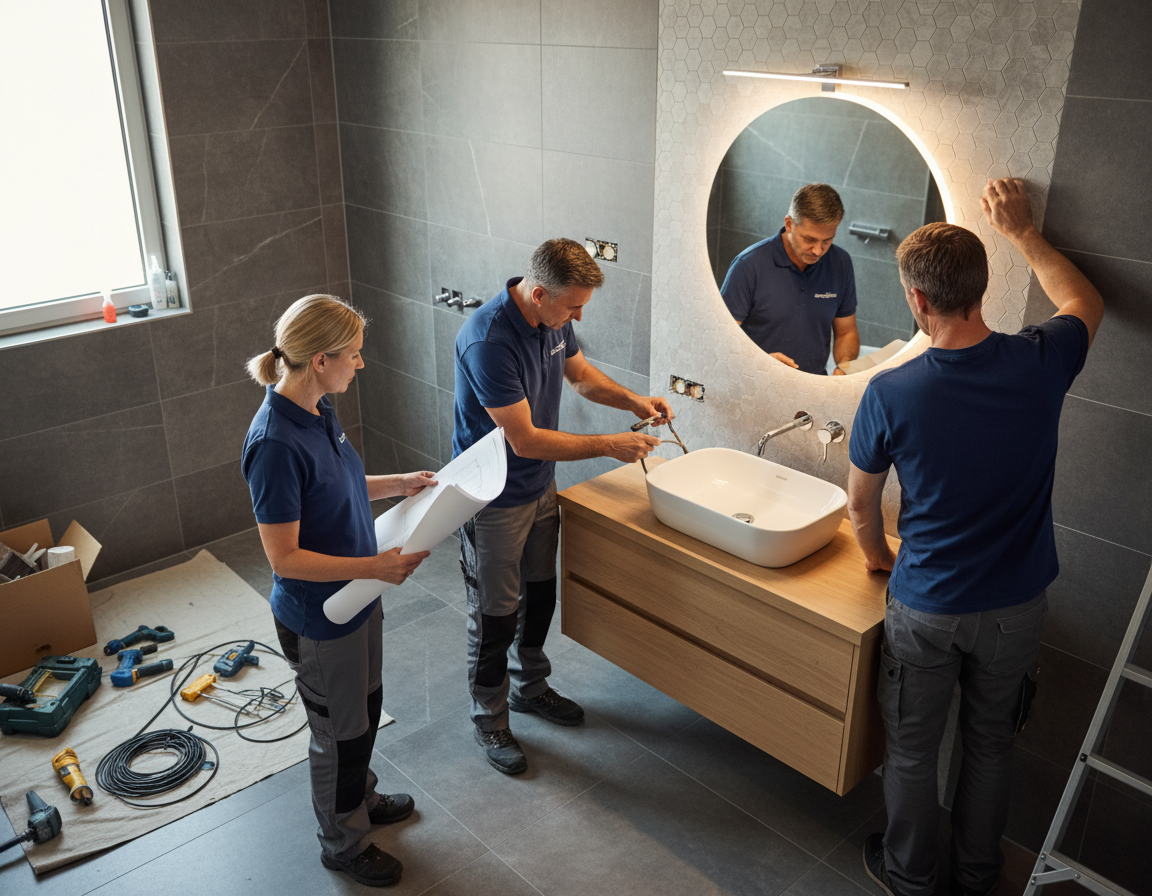
How To Remodel A Bathroom
Start by walking the space with a tape measure and marked photos. Pay attention to plumbing lines, electrical paths, door swings, ceiling slopes, and natural light points like skylights. That simple survey gives you a clearer understanding before you make decisions or request bids.
Evaluate The Existing Layout And Feasibility
Take measurements between fixtures and capture photos from multiple viewpoints. Confirm where the supply and drain lines run behind the walls and below the floor. If you plan major moves—tub to shower or relocating a vanity—have a contractor assess plumbing access and structural support.
Check for concealed problems like mold, rot, or joist issues that may change the cost and schedule. In compact bathrooms, plumbing stacks and venting can restrict what can realistically be moved. Confirm what can move without costly rerouting.
Choose What To Keep, Replace, Or Move
Leave items in place when the cost to move them outweighs the benefit. In many remodels, leaving the toilet and vanity where they are saves time and money.
Swap out fixtures that are outdated, damaged, or inefficient. Newer low-flow fixtures and efficient toilets can lower utility costs and make the bathroom more appealing.
Reposition only after a contractor confirms plumbing and electrical feasibility. One realistic example is replacing a tub with a walk-in shower and adding cabinetry over a stacked washer/dryer to free up floor area, while leaving the vanity and toilet where they are to avoid relocation expense.
Choose Between DIY And Hiring Professionals
Decide tasks you can handle safely and those that need a pro. Doing some of the work yourself can save money on demo, paint, and basic installs. A moderate DIY project may take a month or more, so plan time accordingly and budget for debris removal.
Professional help is best for plumbing, electrical, structural changes, complex tile installation, and permit-related work. Good plumbers and tilers often save money by preventing mistakes and redo work. Large-format tile installation and wet-area waterproofing require both accuracy and experience.
If you opt to DIY, gather safety gear, caulking guns, drills, saws, shop vacs, and consider renting a wet-dry vac or tile cutter. Set a firm scope and schedule so scope creep does not derail the bathroom remodeling process.
| Project Decision Point | DIY Suitable | Professional Help Recommended |
|---|---|---|
| Demo and debris removal | Yes—if safety equipment and debris disposal are already planned | No—hire for large structural teardown |
| Moving plumbing lines | No—only simple fixture replacement is appropriate for DIY | Yes—this needs permits and code-compliant work |
| Electrical upgrades | No—DIY is not advised for new outlets or circuit work | Yes—a licensed electrician is recommended for safety and inspection |
| Tile work | Yes—for smaller and simpler layouts | Yes—for large-format, wet areas, and complex patterns |
| Painting and trim work | Yes—usually a standard DIY-friendly task | No—except when specialty finishes or detailed millwork are involved |
| Small bathroom remodel tips | Consider wall-mounted fixtures and floating vanities | Ask professionals to handle shower conversions and waterproofing |
Demolition And Preparing The Space
Begin demolition carefully, with safety and organization as priorities. First, turn off the water, drain the lines, and remove the toilet so spills are avoided. Wear protective gear like a respirator, gloves, and goggles. A reciprocating saw can help make precise cuts near insulated areas.
Rent a dumpster that fits the demolition debris to maintain a clean site.
Remove fixtures, vanities, mirrors, and flooring in a systematic order. Before removing anything, document the room with measurements and photos. This ensures accurate fitting later. Use drop cloths and dust barriers to protect adjacent rooms and floors, reducing cleanup and dust spread.
Safe Demolition Practices
Begin by isolating utilities and capping lines. Remove the toilet and vanity first to clear the area. Avoid aggressive hammering into insulated walls; instead, cut around studs and fasteners when feasible. Bag and label any salvageable fixtures so reinstallation is easier later.
Check For And Repair Hidden Damage
After removing finishes, inspect for rot, mold, and water damage behind tile and under subfloors. Soft spots in the subfloor may require replacement. Because large-format tile needs a flatter base, use cement board or self-leveling compound where required.
If framing or structural members are damaged, consult a structural contractor or licensed engineer. Fixing studs and headers early helps keep the project moving and avoids delays later during finish work.
Permit Workflow And Inspector Coordination
Secure permits for plumbing, electrical, or structural changes before starting rough-in work. Plan inspections before insulation and drywall so the rough-ins can be approved on time. Stay in communication with inspectors so delays do not hold up the finish stage.
An experienced contractor can often take over permit submissions and inspector scheduling for you. Local code knowledge usually helps a contractor move approvals along and keep the remodel progressing.
Plan for temporary needs during the renovation. Try to keep at least one bathroom available in the house or nearby. Temporary solutions can range from a neighboring house to a portable unit during the most disruptive phases.
Use these practices to reduce risk, protect the timeline, and support accurate inspections and repairs. Careful demolition and preparation can save both time and money, making the entire project smoother from rough-ins through finishing.
Plumbing, Electrical, And Structural Rough-Ins
Before walls are built and tile is laid, plumbing, electrical, and structural rough-ins must be completed. They set the foundation for the layout, budget, and schedule of the bathroom renovation. They are essential to the project’s overall success.
Plumbing Planning And Layout Impact
Choosing the right fixtures is essential. Choices such as wall-mounted or deck-mounted faucets and single or double vanities affect valve and water-line placement. Adding a shower or replacing a tub with a walk-in shower requires precise drain positioning and slope checks.
Installing a soaking tub necessitates verifying joist capacity. A structural engineer or a licensed contractor may suggest reinforcement or beam replacement to support the tub’s weight.
Electrical Planning And Lighting Upgrades
Allow for extra circuits if you are adding fixtures, fans, or heated elements. Consider smart controls like Lutron Caséta switches or voice assistants like Echo Dot for convenience and energy efficiency.
Conveniently located vanity outlets make the room more functional. Set up separate lighting zones for task, ambient, and accent needs so you avoid glare and shadowy areas. Electrical work should always be handled by a licensed electrician, with inspections completed before wall closure.
Structural Work And Subfloor Preparation
Make sure the subfloor is properly level. Large-format tile needs a particularly flat surface to perform well. You might need two layers of cement board or a self-leveling compound to avoid lippage.
Any damaged subfloor areas should be replaced, and thresholds should be sealed against water intrusion. Use the proper slopes and finishes so stone surfaces such as quartz countertops are protected from water exposure and etching.
Sequence the work carefully by completing plumbing and electrical rough-ins first, then getting inspections approved. Proceed with insulation, drywall, and tile work. Buy the vanity early so the plumbing rough-ins line up with the countertop cut-outs and fixture locations.
Finishes: Tile, Waterproofing, Paint, And Final Fixtures
Finish selections play a big role in both appearance and function. Begin the finish stage by choosing tile in person rather than only online. Look at the tile under real light, test its intended orientation, and compare grout colors with Schluter® trim options. Suppliers like Fitzgerald Tile can help match grout color and trim for a cohesive look.
Tile installation requires careful planning. Prepare the substrate, ensuring it’s level and dry. Use cement board in areas that require a stronger tile base. Consistent thin-set mixing and laser-level checks improve installation accuracy. Employ spacers or leveling clips for uniform joints. Two installers are often the safer choice when handling large tile because control matters more.
Waterproofing is essential for long-term performance. A pan liner beneath the shower-floor mortar and the correct slope to the drain are both essential. Wall protection should include cement board and a liquid membrane like RedGard. Set the shower controls where users can reach them without stepping into cold water. Custom glass should be measured early since its lead time may extend the entire project.
Paint and trim help complete the room once the tile phase is done. Choose semi-gloss paint or other moisture-resistant options. Try small paint samples from stores like Lowe’s before committing. Consider Sherwin-Williams Snowbound for a bright field and a darker trim for contrast. Choose tile edge trim like Schluter for clean reveals, or use quarter round or baseboard where tile meets painted surfaces.
Choose fixtures that fit both the design and the rough-in conditions. Confirm that Hansgrohe faucets and shower systems match the rough-in positions. Measure carefully and review the spec sheets before ordering. Woodbridge is one example of a toilet brand often considered reliable. Leftover slabs from Mass Granite or local stone yards can be useful for saving money on thresholds and sills.
Useful bathroom renovation reminders include coordinating grout and trim when choosing tile, completing waterproofing ahead of finish work, and confirming dimensions for fixtures early. Following those steps can reduce callbacks during the makeover and support smarter design decisions that last.
Installing Cabinets, Hardware, And Final Hookups
The finish stage is the last major phase of the bathroom makeover. This stage includes installing the vanity, placing countertops, fitting storage pieces, and completing the final plumbing and electrical connections. It’s essential to plan the sequence to ensure plumbers and electricians can complete their work before you start installing cabinets and surfaces.
Install the vanity early enough that plumbers can still make piping adjustments. Verify that wall-mounted faucet locations are properly aligned. Measure for sink configurations and wall clearances. Use preselected quartz or stone slabs for the countertop and confirm the slope so water will not pool or etch the surface.
Cabinet frames should be level and anchored firmly into studs during installation. If this is a DIY install, dry-fit the drawers and doors before securing everything permanently. A bathroom renovation contractor can expedite this process and avoid costly errors.
Install storage that suits both your needs and the room’s size. Consider built-ins, floating shelves, or over-washer cabinetry to maximize space. Coordinate mirrors and medicine cabinets, like the Pillar-30 by Blossom, for a cohesive look. Add smart elements, such as Lutron Caséta switches and Echo Dot speakers, for integrated controls.
Install fixtures and glass after tile, trim, and flooring have cured. Plan glass installation after grout and trim are fully completed. Since custom glass may take time, be ready with a temporary shower plan if necessary.
Install shower doors, seals, and grab bars carefully so leaks are avoided. Where required, use sealed fasteners and follow the manufacturer’s torque specs. Check that sliding or swinging doors operate smoothly and have even clearances.
Grout fills gaps after tile work and should be sealed when specified. Use color-matched grout for seamless visuals. Seal every joint between tile, trim, and fixtures with the correct silicone caulk to stop water intrusion.
Allow full cure times before exposing surfaces to water. Read the product directions for grout sealer and silicone cure times so the finishes and warranties stay protected.
Walk through the space with your contractor to create a punch list of touch-ups such as grout correction, paint spots, or trim alignment. Arrange final plumbing and electrical inspections and obtain sign-offs before you move in.
Confirm warranties for fixtures and workmanship, and collect maintenance tips for quartz and grout care. To finish the makeover, add details like bath rugs, greenery such as a peace lily, and coordinated accessories from retailers like Crate & Barrel, Amazon, or Wayfair.
Final Thoughts
Starting a bathroom remodel successfully depends on clear planning and a practical design. Begin by setting goals and sketching layouts before purchasing materials. Build a budget that includes extra room for unexpected costs. Making style and scope decisions early helps streamline the project and improves cost estimating.
Check feasibility and permit requirements before you start demolition. During teardown, inspect hidden systems and prepare for plumbing, electrical, and structural rough-ins. Working with experienced professionals—such as a licensed contractor or a company like Renovate Builders—can reduce costly mistakes. This ensures that trades like tilers and structural crews adhere to codes and inspector requirements.
Focus on durable finishes and timing. Order long-lead items, like vanities, custom stone, and glass, well in advance to avoid delays. Lasting performance depends on prioritizing waterproofing, precise tile prep, and proper sealing. Sequence work effectively: start with demolition and inspections, then rough-ins, followed by waterproofing and tile, and conclude with final installs and inspections.
Use these steps as a framework for planning your budget and schedule. Visit showrooms to select materials in person and consult a licensed contractor for permit needs and structural assessments. By following this process, you improve your chances of completing a bathroom that is cost-conscious, safe, functional, and visually appealing.
Related: Top 10 Bathroom Remodeling Kirkland Wa Contractors Reviewed